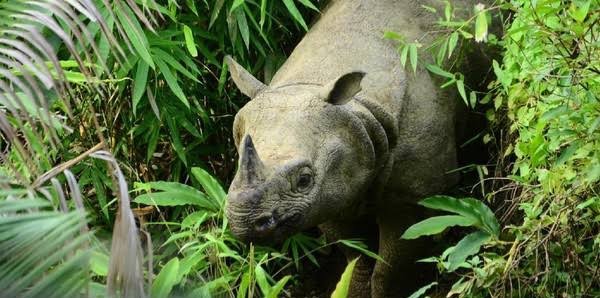
ZOAHARIAN.COM – The plan to move Javan rhinos from Ujung Kulon National Park to Alas Purwo National Park is asked not to be carried out in a hurry. The Prosperous Justice Party (PKS) believes that the government needs to ensure all aspects of safety before making a decision to relocate these endangered animals.
PKS reminded that the transfer of Javan rhinos is not just moving the animals from one area to another. Careful calculations are needed so that rescue efforts do not create new problems for the survival of this rare species.
Chairman of the Energy, Environment and Climate Change Sector of the PKS DPP, Dr. Agus Ismail, M.Eng., said that Ujung Kulon National Park must remain the main focus of conservation because it is the last natural habitat of the Javan rhino.
The condition of the population is increasingly worrying. Based on data from the Asian Rhino Specialist Group (AsRSG) as of February 2026, the number of Javan rhinos is estimated to be less than 50 individuals remaining.
"Ujung Kulon as the last natural habitat of the Javan Rhinoceros must continue to be protected and its protection must be strengthened," said Agus in his official statement, Monday, November 16 2026.
He said a number of threats still loom over the survival of the Javan rhino. These include the potential for earthquakes, tsunamis, illegal hunting and environmental damage.
To anticipate this threat, the government needs to increase regional supervision and security. Strengthening early warning systems, disaster mitigation, patrols and habitat monitoring are considered important steps that must be taken immediately.
PKS Requests Postponement of Relocation
Agus emphasized that the plan to move Javan rhinos to Alas Purwo must go through thorough research. The government must not only consider the availability of areas, but must also ensure that new habitats are truly capable of supporting the life of these animals.
A number of aspects that must be studied include food and water availability, ecosystem conditions, environmental carrying capacity, disease threats, adaptability and reproductive opportunities.
"Don't let policies intended to save actually create new risks for the survival of the Javan Rhino," he stressed.
PKS also asked the Ministry of Forestry to postpone the implementation of relocation outside Ujung Kulon until the results of scientific studies are available and can be openly accessed by the public.
Agus also asked the government to involve experts, academics, researchers and conservation institutions in the decision-making process. That way, the resulting policy has a scientific basis and takes into account the future of the Javan rhino population.
On the other hand, SMEs still consider it important to develop the second habitat or second population area. This strategy is needed to reduce the risk of extinction when the entire Javan rhinoceros population only depends on one area.
One program of concern is the Javan Rhino Study and Conservation Area (JRSCA), which has been developed by the Ministry of Forestry since 2025.
Agus added that preserving the Javan rhino cannot only rely on the central government. Local governments, researchers, conservation institutions and local communities must also play a role.
According to him, residents who live around conservation areas must be positioned as partners in protecting habitat and preserving the ecosystem.
"The community is not just a party that accepts policies, but is an important partner in preserving the habitat and sustainability of the Ujung Kulon ecosystem," he concluded.
PKS hopes that every step taken to save the Javan rhinoceros really prioritizes animal safety. Because, with a very limited population, mistakes in making policies can have a big impact on the future of the species.
Comment (0)
No comments yet. Be the first!
Leave a Comment